
Purpose: What is your community for?
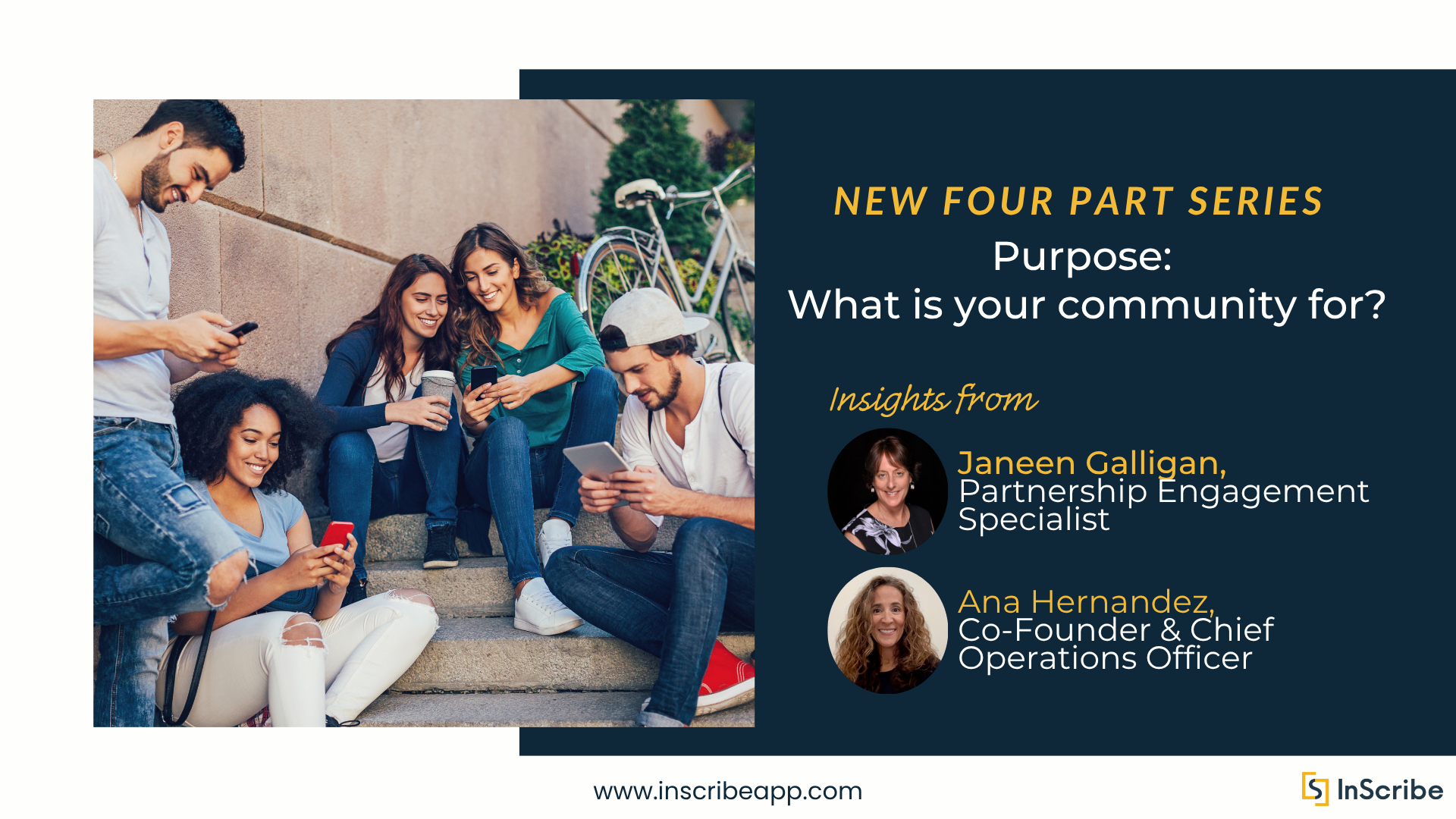
By Janeen Galligan, Partnership Engagement Specialist and Ana Hernandez, Co-Founder & Chief Operations Officer at InScribe
Today, we launch a four part series on what we refer to as the 4 P’s™ of your InScribe community. If you currently are managing an InScribe community and are looking for ways to increase engagement, we hope these blogs give you some ideas. If you are new to InScribe, we hope these ideas help you to create an engaging, inviting digital community for your learners. We want to help you create a place for your learners to connect with one another and your organization.
First up...purpose.
Successful communities have a clear and singular purpose. If you try to do too many things in a single community, your users are going to be less likely to engage in the way you want them to. Think about your organization’s culture. How can you showcase that culture in InScribe to help engage your learners and let them know they are part of your school culture - no matter how busy or where they are located.
Following are some guidelines to follow based on the type of community you have implemented.
Peer to Peer: If your goal is to encourage peer to peer interaction, don't post too many resources or conversations as the moderators. We've seen that students are much less likely to post on their own if the moderators are pushing too much information to them. It's tempting to jump in if you see conversations lagging, but instead, reach out to a student and ask them to jump in and get things going.Think about the space you created. Is it warm and inviting? Is it active so that students have a purpose to come back from week to week?
Academic Support: If your goal is to help scale support, make it clear to your students that the community is the place to go if they need help. This should be shared in your course expectations and even your syllabus. If students reach out in other ways to ask questions that could be asked in the community, redirect them there so everyone can benefit from the conversation. If you're looking to encourage peer to peer support, let your students know that you'd like to see them try to help each other before the facilitators jump in. We've seen that students are ready and able to help each other if they know that's the expectation.
Information Sharing: If you have great information coming to you that you want to make sure all your users see, setting up your community as an information kiosk is a good way to go. Make sure you've imported all the users you think will need the information, and then be sure you're keeping it up to date. Use live sessions to advertise anything they might want to add to their calendar or get a reminder about. Don't expect a lot of interaction in these types of communities. Remember, the goal here is information sharing from the school to the students. With all communication - know your audience, what information will be helpful to your members? Keep it fresh and updated at least once a week.
Student Success: Much like a peer-to-peer community, you'll want to clearly communicate that this is a student space with advisors there for support and information sharing. Creating share posts and live sessions is great, but be careful not to monopolize the conversation. If you ask advisors to post too frequently, you will end up with an information sharing community and lose out on that student to student interaction. We can help you create a community where learners can easily see each others’ posts and any helpful information that would benefit them.
Next week…placement.
About the Authors
Janeen Galligan is an educator in higher education and a Partner Engagement Specialist at InScribe. Her mission is to lighten the load for her partners, allowing them to focus on what truly matters: ensuring every student feels seen. Janeen is dedicated to creating spaces where learners—regardless of their life stage—realize they are not alone in their academic journey. By fostering these deep connections, she helps build communities where belonging is the foundation for success.
Ana Hernandez began her career as a high school English teacher in Denver, CO. Now as a Latina entrepreneur in education technology, she is creating solutions that make educational opportunities more accessible and attainable for everyone. In 2014, she launched an education technology consulting company, which spawned a product company, InScribe, in 2017. She’s a Colorado native and avid runner who has completed eleven marathons, including the 2018 Boston Marathon, Ana is also the proud mother of a 15-year-old son and two badly behaved standard poodles.